
From core box to delivery
Every step of shell moulding core production is carried out in-house.
How a core is made
Shell moulding uses silica sand pre-coated with phenolic resin, which cures on contact with the heated core box. The result: light, precise and strong cores, ideal for complex castings.
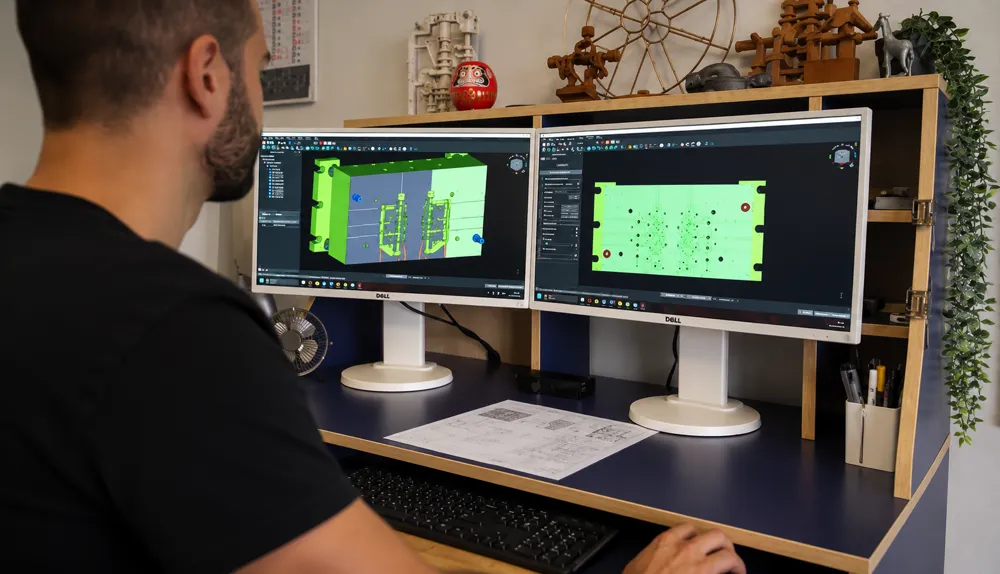
Design
Our technical office works with the foundry and pattern shop on the core box, shooting points and vents, and follows the set-up up to sampling.
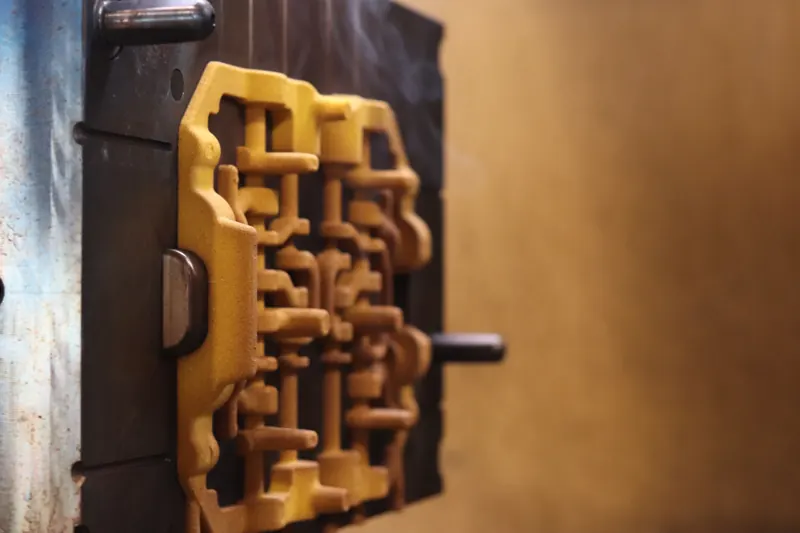
Shooting
SMEC machines shoot the sand into the heated box: curing times and temperatures are set and monitored over the network for every part number.
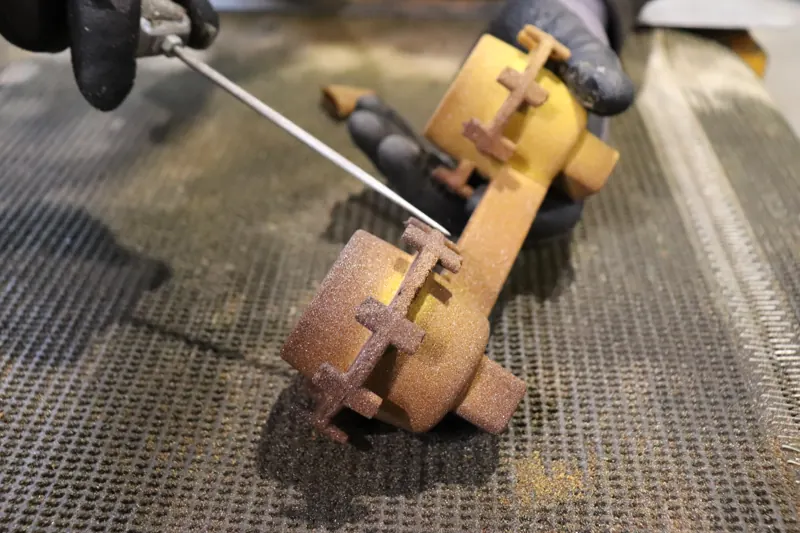
Deburring
Each core is finished by hand to remove flash along the parting lines, so it reaches the foundry ready to use.
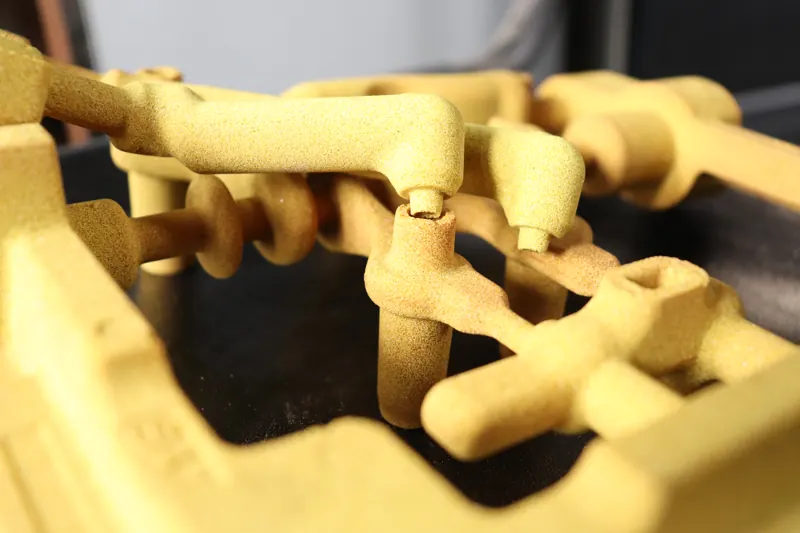
Gluing
Multi-part cores are assembled and glued accurately to the dimensions on the drawing.
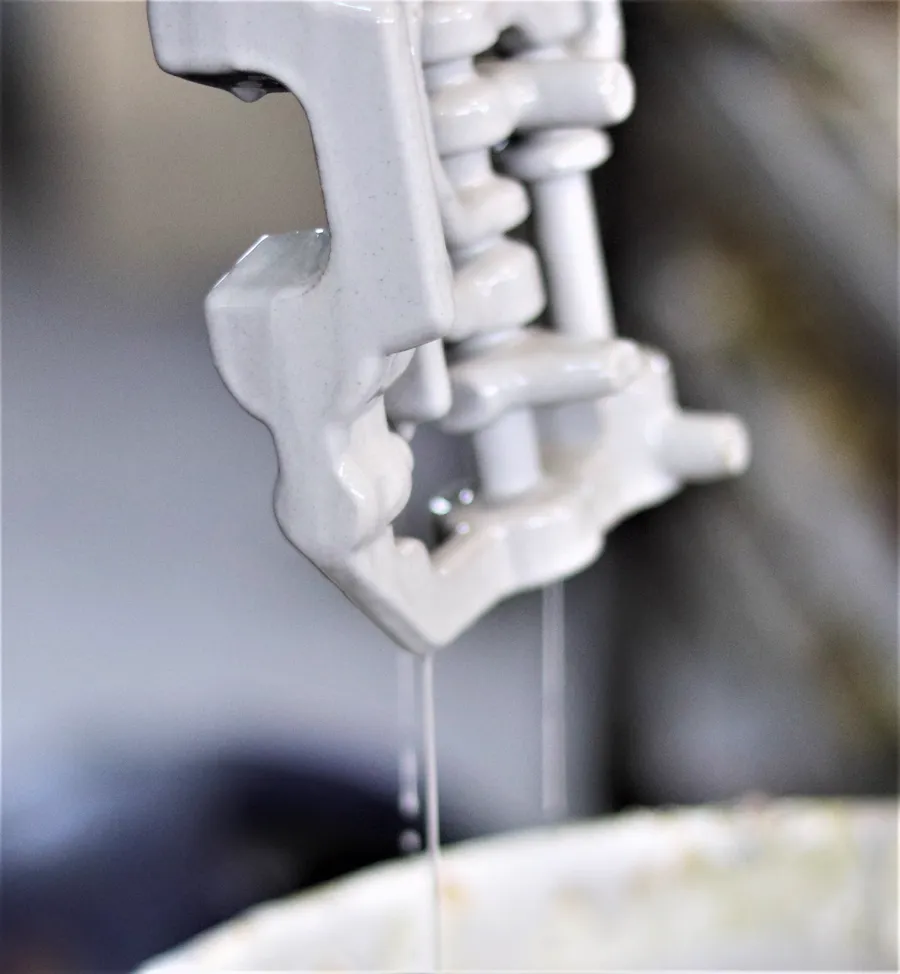
Coating
On request we apply refractory coatings that improve casting surface finish and reduce penetration defects.
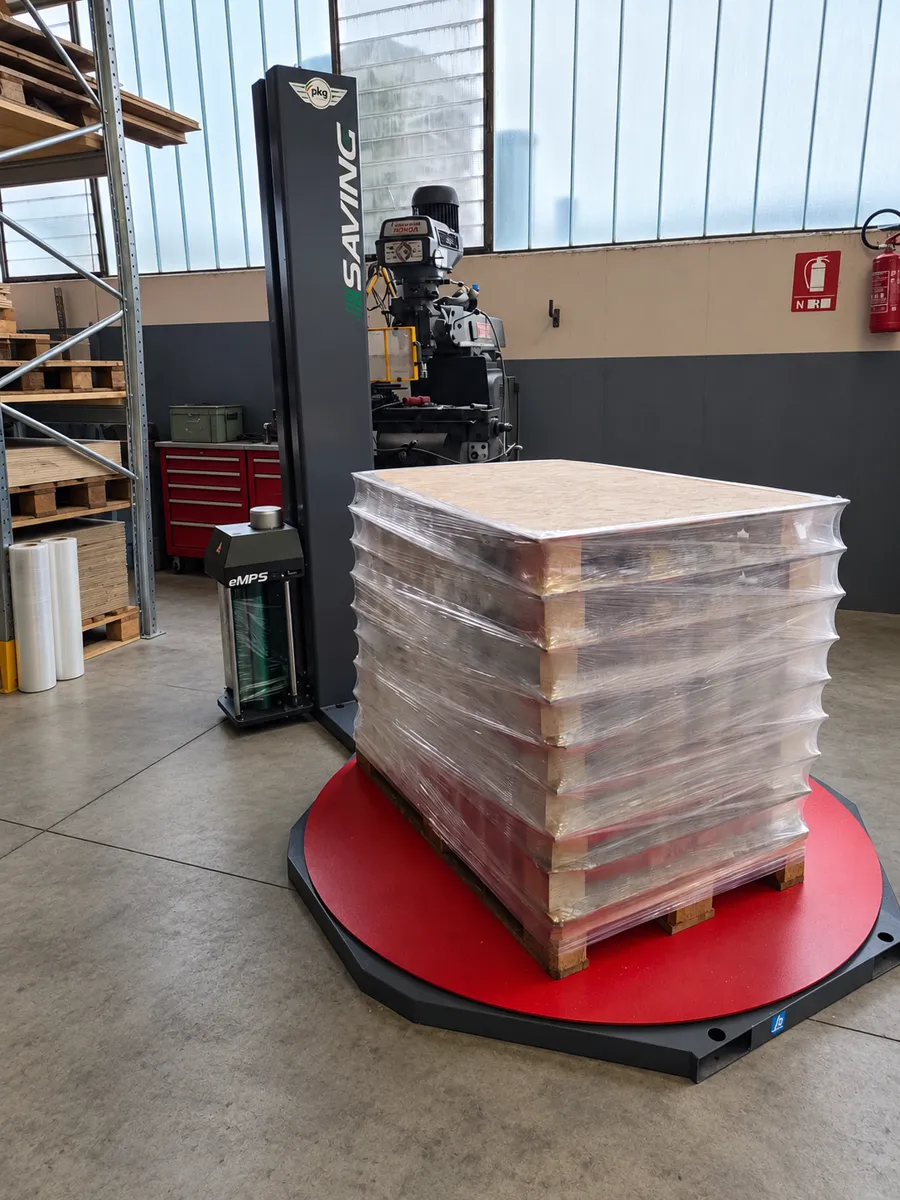
Packaging & delivery
Protective, reusable packaging, specialised hauliers and scheduled deliveries from our warehouse.
Industries and materials
Every industry asks something different of a core. Hover over an industry to find out.
Automotive
Precision to the tenthCores for engine components, housings and manifolds: tight tolerances, clean surfaces and repeatability over large runs.
Earth-moving
Strength and sizeCores, including large ones, for heavy-duty castings for excavators, loaders and construction machinery.
Hydraulics
Complex internal passagesAssembled and glued cores for valve bodies, distributors and pumps, where every internal passage counts.
Engineering
Tailor-madeSolutions for general engineering, from sampling to series, including small batches and special parts.
Industry photos: automotive from Pexels; earth-moving: Petwoe, Wikimedia Commons, GFDL; hydraulics and engineering: S.J. de Waard, Wikimedia Commons, CC BY 2.5. Representative images.
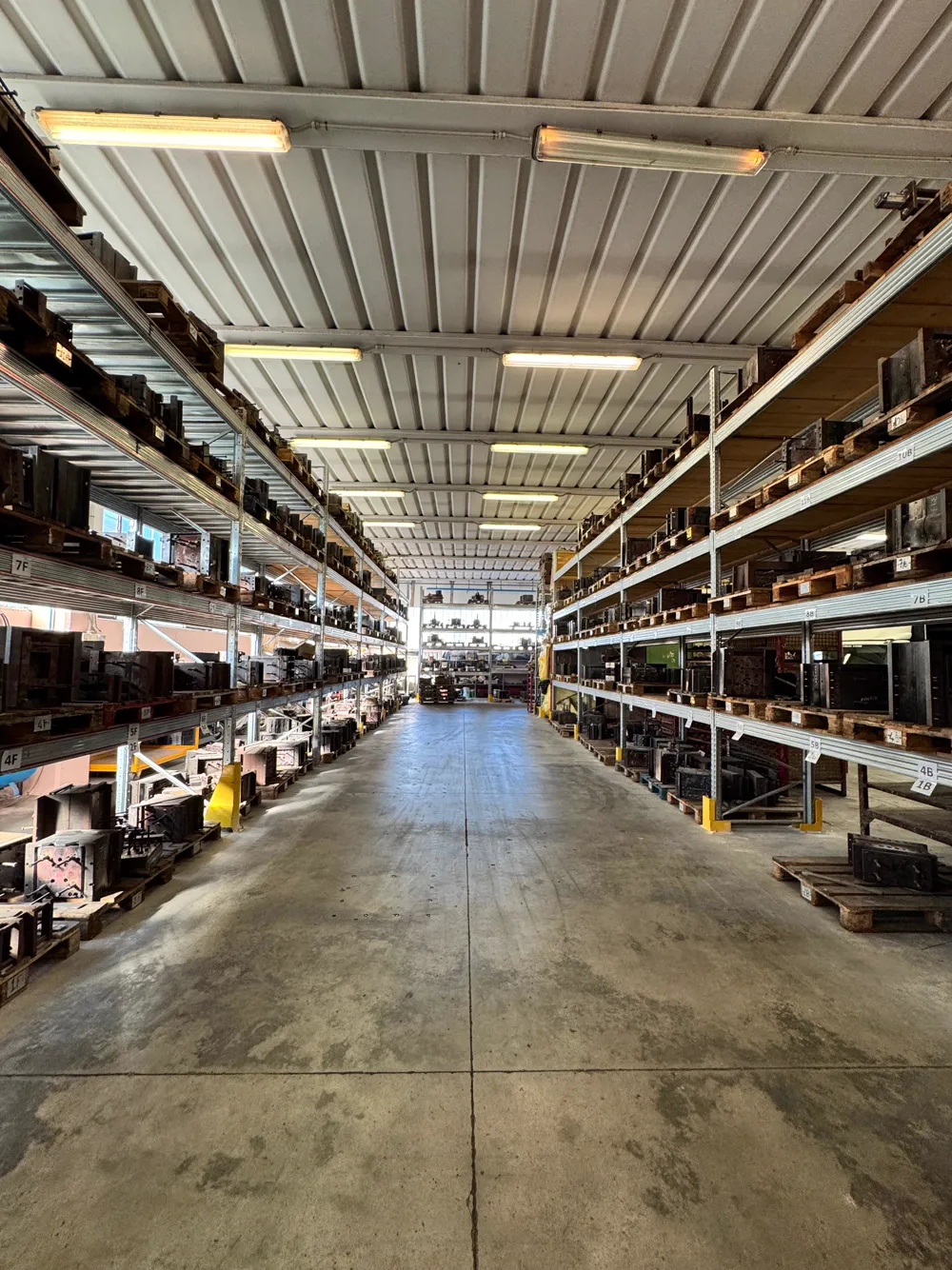
800 m² own warehouse
We store our customers’ core boxes and keep stocks of ready-to-ship cores, so we can respond quickly to repeat orders and manage very large batches.